Nerve Damage After a Dental Implant
Implant cases are unusually measurable: the pre-operative bone, planned fixture and final position can often be compared directly using original images and component records.
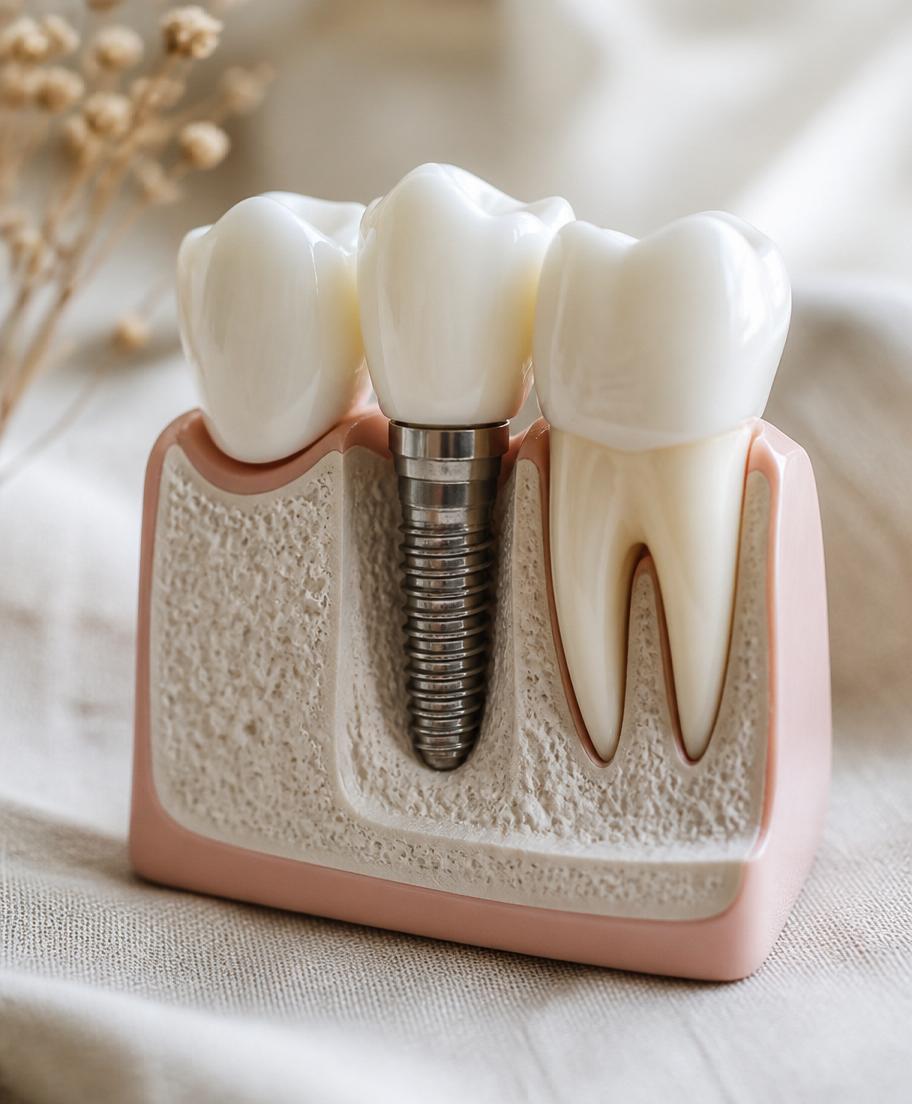
Lower-lip and chin numbness beginning as anaesthetic resolves is the classic presentation
The mandibular canal carries the inferior alveolar nerve through the lower jaw. Implant drilling, the fixture itself, bleeding or pressure can affect it. Symptoms may include dense numbness, tingling, burning, electric-shock pain or painful touch in lower teeth, gum, lip and chin. Tongue symptoms raise a different anatomical question. Immediate onset supports a procedural mechanism, but the legal case still requires evidence about planning and placement. Persistent altered sensation should not be dismissed merely because implants have recognised risks.
Available bone, canal position and the exact fixture must agree
Competent planning considers three-dimensional anatomy where clinically indicated, the reliability of measurements, drilling depth, implant length and diameter, trajectory, surgical guides and an appropriate safety strategy. CBCT does not make surgery risk-free and is not a substitute for interpretation. The implant actually placed must match the plan or any change must be clinically justified and documented. Original DICOM data, planning screenshots, drill protocol and packaging labels can reconstruct the decision. An expert distinguishes nerve injury from a fixture that is radiographically close but not causative.
The opportunity to relieve compression may be time-sensitive
Where abnormal sensation persists as anaesthetic resolves, prompt contact, examination and imaging may be required. Depending on findings, urgent specialist advice and removal or repositioning of a compressive fixture may be considered. The site does not prescribe an automatic treatment because timing, stability, anatomy and mechanism matter. The legal question is what a competent implant clinician should have done and whether earlier action would probably have improved prognosis. Call logs and messages often establish that opportunity more clearly than a later recollection.
DICOM data, component labels and post-operative imaging form the core
Request the full assessment, periodontal and medical history, consent, original radiographs and CBCT, digital plan, surgical guide data, drill lengths, implant make and dimensions, operative record and post-operative contacts. Later scans identify final position; sensory maps establish injury and change. A replacement screenshot is not equivalent to the original dataset. Experts may need to address implant surgery, nerve prognosis and future restoration separately. The claimant should document function and treatment without repeatedly testing or injuring the numb area.
The claim can include both nerve injury and the consequences of removing the implant
Recoverable loss may include persistent altered sensation, neuropathic pain, medication, specialist care, psychological injury where proved and earnings, together with implant removal, grafting, temporary teeth and reasonable replacement. The original need to replace the missing tooth remains a baseline cost and is not automatically recoverable in full. Prognosis and a coherent restorative plan are needed before settlement.
Was the dental implant placed into the nerve canal?
Nerve damage after a dental implant requires urgent assessment because an implant placed into the nerve canal, or compressing it closely, may need prompt intervention. Pre-operative CBCT where indicated, measurements, drill depth, implant dimensions, post-operative imaging and the response to immediate numbness are central. The issue is not merely that the implant failed, but whether avoidable positioning or delayed decompression caused neurological loss.
FAQs
Frequently asked questions
Temporary anaesthetic numbness is expected. Persistent or abnormal lower-lip, chin or tooth sensation as it resolves should be reported promptly for assessment.
It strongly informs mechanism, but an expert still assesses planning, measurements, placement, response and the injury actually caused.
Imaging must be clinically justified. The question is whether sufficient, suitable information was obtained and interpreted for safe individual planning.
It may help in selected compression injuries, especially when action is timely, but recovery is not guaranteed. Specialist clinical advice is required urgently.
The implant label, patient passport, stock record, surgical note and radiographs can identify its make, diameter and length.
Potentially, where negligence caused removal and another implant is clinically reasonable. Baseline replacement costs and alternative options must be considered.
Not sure whether what happened crosses the line? Take a private, five-minute view. in confidence.
Free · confidential · no win, no fee · no obligation
Speak with the team · 0800 0126410Continue reading
Other treatments
Dental Implants
Poorly planned or badly placed implants can cause nerve damage, sinus perforation and lasting pain.
Failed Dental Implant Negligence Claims
Loose, infected or unsuitable dental implants: when failure reflects biological risk and when planning, placement or maintenance may be negligent.

Nerve Damage After Dental Injection
Persistent tongue, lip or facial sensation after local anaesthetic: when injection-related nerve injury may support a dental claim.