No Win, No Fee Dental Negligence Claims
‘No win, no fee’ describes a funding arrangement, not a promise that bringing a claim is free in every possible outcome. The written agreement should explain the deductions, insurance and exceptions before you decide.
Written / reviewed by Osman Zulfiqar, SRA-regulated Solicitor.
At a glance
What separates a poor outcome from a claim
| Not enough on its own | What supports a claim |
|---|---|
| A disappointing result or recognised complication | Care that fell below a reasonable professional standard |
| A mistake that caused no additional injury or expense | A failure that probably caused avoidable harm or financial loss |
| Concern based only on hindsight | Independent expert evidence supporting breach and causation |
What no win, no fee means in a dental claim
Most dental negligence cases funded this way use a conditional fee agreement. The solicitor carries out the legal work without sending monthly bills for their ordinary fees. If the case is unsuccessful, those fees are not normally payable by you. If it succeeds, the defendant generally pays part of the legal costs and the agreement permits defined deductions from compensation. Those deductions can include a success fee and an insurance premium. They are not the solicitor taking an unexplained percentage of the award: the basis and maximum must be set out in writing. Read the client-care letter alongside the conditional fee agreement, because one may explain points the other cross-refers to. A reputable firm will answer questions about a worked example in pounds, not rely on the phrase ‘no win, no fee’ as if its meaning were self-evident.
Success fees, insurance and the statutory cap
A success fee compensates the solicitor for taking the risk that the work will go unpaid. In personal-injury claims it is subject to a statutory cap: it cannot exceed 25% of the damages for pain, suffering and loss of amenity and past financial loss, excluding future losses. That is a ceiling, not an automatic charge in every case. After-the-event insurance may protect against expenses such as expert reports and, in defined circumstances, an opponent’s costs. Its premium and when it becomes payable should be clear. Ask whether VAT is included in any quoted percentage, whether the firm limits total deductions, and whether future treatment money is protected. Never assume two firms using the same headline phrase offer identical terms.
What happens if the expert cannot support the claim
A properly conducted claim can fail even where the patient was genuinely harmed. Independent evidence may show that treatment met the appropriate standard or that the same damage would have occurred with competent care. Under a valid agreement you will not usually pay the solicitor’s ordinary fees when that happens. The position on expert fees, insurance, dishonest evidence, failure to cooperate or ending the agreement early depends on its written terms. Tell the solicitor everything that may affect the case, including missed appointments, previous dental problems and an earlier complaint response. A funding decision is reviewed as evidence develops; stopping promptly after an unsupportive expert opinion is often responsible case management, not a lack of belief in the patient.
Why a firm must assess prospects and proportionality first
No win, no fee shifts financial risk to the legal team, so the firm must be satisfied that the claim has reasonable prospects and that likely compensation justifies the cost of proving it. Dental cases require records, radiographs and independent clinicians. A clear error may still be disproportionate if it caused only a short-lived inconvenience; a technically difficult case may be viable where permanent nerve damage or extensive reconstruction is involved. Limitation also matters because a late enquiry may leave too little time for a safe investigation. A refusal of funding does not necessarily mean nothing went wrong. Ask whether the concern is breach, causation, value, evidence or timing, because that answer is more useful than a generic rejection.
Six questions worth asking in plain English
Ask what percentage could be deducted, what it applies to, whether VAT is included, who pays expert expenses if the case loses, what happens if you end the agreement, and whether you could ever pay the defendant’s costs. Also ask who will conduct the work and how often funding is reviewed. The answers should be recorded in the documents, not offered only on a call. Take time to read them and query unfamiliar terms. You do not need to sign during the first conversation. The value of funding is the ability to investigate a sound claim without unaffordable upfront legal bills; that benefit is strongest when the risks and deductions are transparent from the beginning.
Questions to ask no win, no fee dental negligence solicitors
Ask who will handle the file, how much dental-negligence work they undertake, which deductions can be made from compensation, how adverse-cost insurance is funded and what happens if expert evidence is unsupportive. No win, no fee dental negligence solicitors should explain the success fee, insurance premium, cancellation terms and any unrecovered costs before you sign.
FAQs
Frequently asked questions
Usually no ordinary solicitor’s fees are paid upfront. The agreement should explain how expert reports, records and insurance are funded and whether any circumstance could make an expense payable by you.
The success fee in a personal-injury claim is subject to a statutory cap, but the actual deduction and any insurance premium depend on the agreement. Ask for the total possible deduction in pounds as well as percentages.
Qualified one-way costs rules usually protect an honest personal-injury claimant, but exceptions exist. After-the-event insurance may provide additional protection. Your solicitor should explain the position for your agreement and conduct.
It may be possible, but costs already incurred and the reason for transfer matter. Do not terminate an agreement before obtaining advice on its consequences and whether another firm will accept the case.
Sometimes. Home, motor or other policies may include legal cover, although choice of solicitor and policy terms vary. Tell the firm about existing insurance before funding is finalised.
No. It describes risk allocation. Prospects can change after records, expert evidence or the defendant’s evidence is received, and a responsible solicitor will tell you when they do.
Not sure whether what happened crosses the line? Take a private, five-minute view. in confidence.
Free · confidential · no win, no fee · no obligation
Speak with the team · 0800 0126410Continue reading
Other claims topics
%20--%3e%3cpath%20d='M600%20240%20L720%20240%20L660%20330%20Z'%20fill='%233E8A8C'%20stroke='%232E6E71'%20stroke-width='4'%20stroke-linejoin='round'/%3e%3cline%20x1='660'%20y1='240'%20x2='660'%20y2='200'%20stroke='%231F2833'%20stroke-width='4'/%3e%3c!--%20right%20pan%20(special%20damages)%20--%3e%3cpath%20d='M880%20260%20L1000%20260%20L940%20350%20Z'%20fill='%233E8A8C'%20stroke='%232E6E71'%20stroke-width='4'%20stroke-linejoin='round'/%3e%3cline%20x1='940'%20y1='260'%20x2='940'%20y2='220'%20stroke='%231F2833'%20stroke-width='4'/%3e%3c!--%20a%20tooth%20as%20the%20weight%20on%20the%20left%20pan%20--%3e%3cpath%20d='M642%20214%20C636%20190%20662%20182%20672%20186%20C682%20182%20708%20190%20702%20214%20C698%20232%20680%20240%20672%20248%20C664%20240%20646%20232%20642%20214%20Z'%20fill='%23F6F4EE'%20stroke='%231F2833'%20stroke-width='4'%20stroke-linejoin='round'/%3e%3c/svg%3e)
How Dental Negligence Compensation Is Calculated
How dental negligence awards are assessed: general damages for the injury, special damages for financial loss, and what drives the figure up or down.
%20node%20--%3e%3cpath%20d='M1066%20343%20l10%2012%20l20%20-26'%20fill='none'%20stroke='%23ECE7DB'%20stroke-width='5'%20stroke-linecap='round'%20stroke-linejoin='round'/%3e%3c!--%20rising%20progress%20line%20above%20--%3e%3cpath%20d='M520%20250%20L632%20238%20L744%20244%20L856%20224%20L968%20214%20L1080%20196'%20fill='none'%20stroke='%232E6E71'%20stroke-width='3'%20stroke-dasharray='8%208'/%3e%3c/svg%3e)
The Dental Negligence Claims Process
What actually happens between your first enquiry and settlement, how long each stage takes, and why most claims never reach a courtroom.
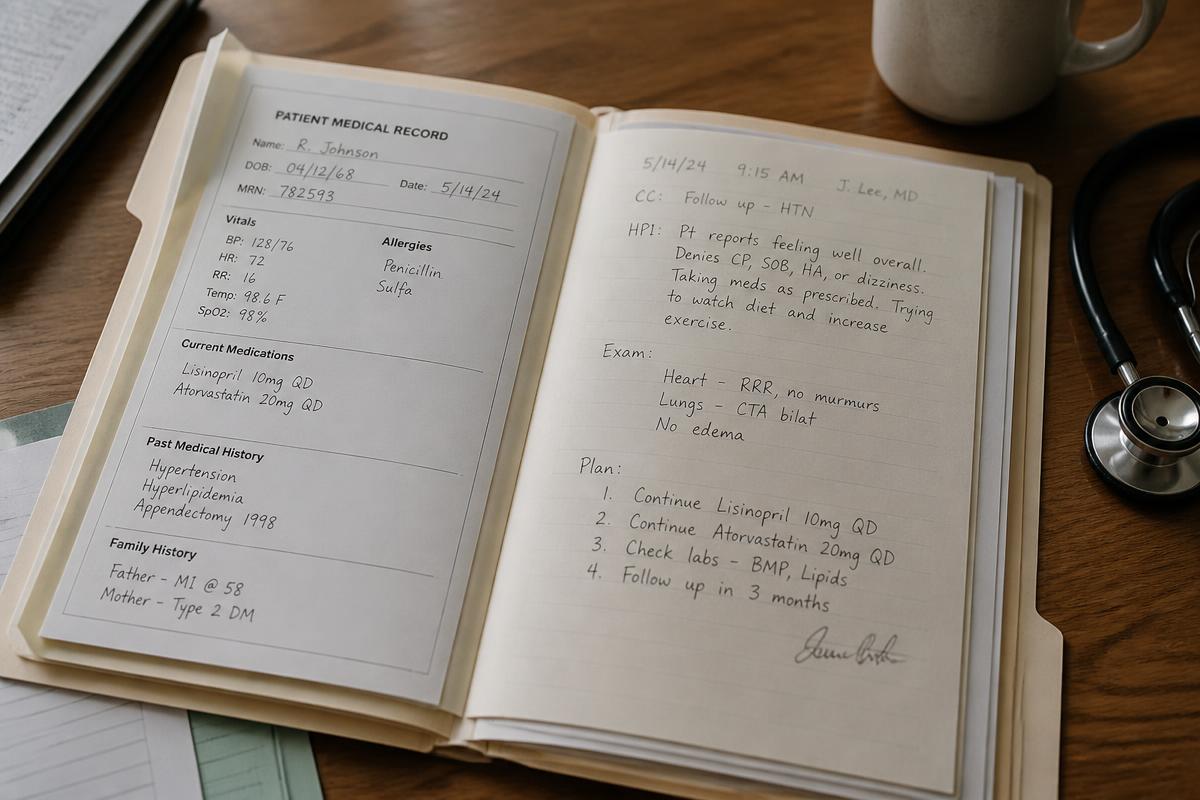
Evidence You'll Need for a Dental Claim
The records, imaging and personal documentation that decide a dental negligence claim, and how to obtain them free of charge.