Peri-Implantitis Negligence Claims
Bleeding around an implant is not merely a cleaning issue when bone support is being lost. Baseline records and serial review distinguish emerging disease from an unexplained late failure.
Written / reviewed by Osman Zulfiqar, SRA-regulated Solicitor.
At a glance
Recognised complication or possible negligence?
| Recognised complication | Possible negligence |
|---|---|
| The injury occurred despite appropriate planning and competent care | The risk was avoidable with reasonable assessment, treatment or follow-up |
| Material risks and alternatives were explained and recorded | A material risk or reasonable alternative was not discussed before treatment |
| Symptoms were recognised, investigated and referred promptly | Warning signs were dismissed or referral was delayed, worsening the outcome |
Mucositis affects soft tissue; peri-implantitis includes bone loss
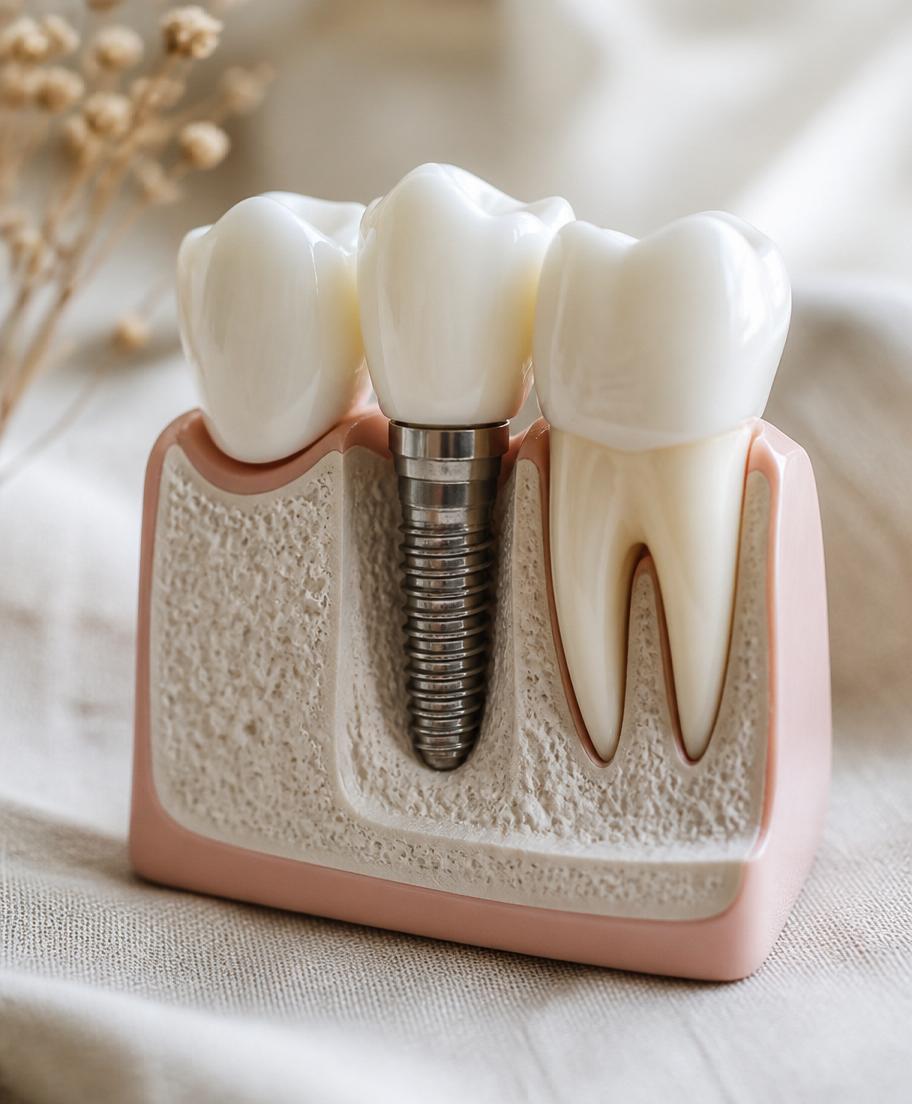
Peri-implant mucositis presents with inflammation and bleeding around an implant without the progressive supporting-bone loss that defines peri-implantitis. Both require assessment, but their prognosis and treatment differ. Peri-implantitis can cause bleeding or suppuration, deepening pockets, recession, unpleasant taste and ultimately implant mobility, although it may progress with little pain. Diagnosis needs comparison with baseline clinical and radiographic information where available. A single late image showing low bone does not explain whether the implant started in a compromised position, remodelled normally or lost support through disease. Accurate classification prevents every sore implant being labelled a failed negligent implant.
Patient selection and a maintainable restoration are part of prevention
Risk is influenced by previous periodontitis, smoking, diabetes control, oral hygiene, implant position, prosthetic design, tissue conditions and maintenance. Risk does not make a patient automatically unsuitable, but it should be assessed, explained and managed. Active periodontal disease generally needs control before implant treatment. The final crown or bridge should allow cleaning, and the patient needs tailored home-care instruction and supportive review. A consent form mentioning implant failure does not replace a coherent prevention plan. Conversely, disease can progress despite good planning where a patient does not attend or cannot control risk factors. The expert examines the interaction and the advice actually given.
No baseline image or probing record makes progressive change harder to detect
Implants require continuing assessment, not simply confirmation that the crown remains attached. Records may include probing, bleeding, suppuration, plaque, recession, mobility and appropriate radiographs compared with baseline. The interval is individual. Repeated bleeding, discharge or bone change should trigger diagnosis and a plan rather than serial antibiotics or routine cleaning without reassessment. The EFP guideline describes a staged approach beginning with non-surgical measures, re-evaluation and progression to surgical treatment or supportive care where required. A legal expert asks what was reasonably indicated at each stage and whether earlier control would probably have preserved more bone or the implant.
Planning, baseline and maintenance records form one continuous story
Obtain pre-implant periodontal records, risk assessment, diagnostic wax-up or digital planning, consent, implant position imaging, make and dimensions, grafting notes, restoration design, baseline radiograph and every maintenance record. Later pocket charts, photographs, cultures where taken, imaging and specialist findings document disease and options. The restorative design itself may need examination to determine whether effective cleaning was possible. The defendant may rely on smoking, diabetes, attendance or home care. Contemporaneous advice and patient behaviour allow those points to be assessed fairly rather than presumed from the later failure.
Salvage, removal and reconstruction depend on the remaining bone
Management may involve hygiene instruction, professional debridement, control of risk factors, non-surgical therapy, specialist surgery, implant removal or reconstruction. Severe bone loss can make replacement difficult and require grafting, a different prosthesis or acceptance that another implant is unsuitable. Compensation isolates the treatment and tissue loss that earlier competent care would probably have avoided. It may include pain, treatment, temporary teeth, earnings and future maintenance, but not ordinary implant upkeep the patient always required. A periodontal and restorative prognosis should support the final plan.
FAQs
Frequently asked questions
Mucositis is soft-tissue inflammation without progressive supporting-bone loss. Peri-implantitis includes inflammation and progressive loss of bone around the implant.
No. It is a recognised biological complication. Planning, risk control, implant position, restoration design, monitoring, treatment and patient behaviour all require assessment.
Sometimes. Disease extent, implant position, surface, defect shape, health and response to staged treatment affect whether retention is realistic.
There is no universal schedule for every patient. Imaging should be clinically justified and compared with suitable baseline information as part of individual monitoring.
No, but it can materially affect risk, causation and prognosis. The evidence should show what advice was given and how smoking interacted with the alleged failures.
Potentially, where those are reasonable and negligence probably caused the additional need. Suitability for another implant must be supported rather than assumed.
Not sure whether what happened crosses the line? Take a private, five-minute view. in confidence.
Free · confidential · no win, no fee · no obligation
Speak with the team · 0800 0126410Continue reading
Related injuries
,%20lower%20on%20the%20right%20--%3e%3cpath%20d='M560%20400%20Q720%20430%20840%20432%20T1120%20470'%20fill='none'%20stroke='%233E8A8C'%20stroke-width='6'%20stroke-linecap='round'/%3e%3c!--%20healthy%20gum%20reference%20(faint)%20--%3e%3cpath%20d='M560%20400%20Q800%20420%201120%20400'%20fill='none'%20stroke='%23C9BFA9'%20stroke-width='3'%20stroke-dasharray='8%208'/%3e%3c!--%20three%20teeth,%20roots%20progressively%20exposed%20L-%3eR%20--%3e%3cg%20fill='%23F6F4EE'%20stroke='%231F2833'%20stroke-width='5'%20stroke-linejoin='round'%3e%3cpath%20d='M640%20400%20C625%20300%20675%20262%20700%20262%20C725%20262%20740%20300%20728%20400%20C724%20440%20656%20440%20640%20400%20Z'/%3e%3cpath%20d='M792%20432%20C778%20300%20828%20262%20852%20262%20C876%20262%20890%20300%20880%20432%20C876%20486%20806%20486%20792%20432%20Z'/%3e%3cpath%20d='M944%20470%20C930%20300%20980%20262%201004%20262%20C1028%20262%201042%20300%201032%20470%20C1028%20528%20958%20528%20944%20470%20Z'/%3e%3c/g%3e%3c!--%20exposed-root%20shading%20on%20the%20most%20affected%20tooth%20--%3e%3cpath%20d='M958%20470%20C955%20430%201022%20430%201020%20470%20C1016%20520%20962%20520%20958%20470%20Z'%20fill='%23E7DCC8'/%3e%3c!--%20periodontal%20probe%20--%3e%3cline%20x1='1180'%20y1='250'%20x2='1010'%20y2='452'%20stroke='%231F2833'%20stroke-width='6'%20stroke-linecap='round'/%3e%3cg%20stroke='%232E6E71'%20stroke-width='4'%3e%3cline%20x1='1120'%20y1='322'%20x2='1140'%20y2='330'/%3e%3cline%20x1='1097'%20y1='349'%20x2='1117'%20y2='357'/%3e%3cline%20x1='1074'%20y1='376'%20x2='1094'%20y2='384'/%3e%3c/g%3e%3c/svg%3e)
Untreated Gum Disease
Periodontal disease that was never charted, monitored or treated, until teeth that could have been saved were lost.
%20--%3e%3ccircle%20cx='800'%20cy='530'%20r='34'%20fill='%233E8A8C'%20stroke='%232E6E71'%20stroke-width='4'/%3e%3cg%20stroke='%232E6E71'%20stroke-width='4'%20stroke-linecap='round'%3e%3cline%20x1='800'%20y1='576'%20x2='800'%20y2='596'/%3e%3cline%20x1='758'%20y1='558'%20x2='744'%20y2='572'/%3e%3cline%20x1='842'%20y1='558'%20x2='856'%20y2='572'/%3e%3c/g%3e%3c!--%20sealed%20crown%20on%20top%20(ink),%20infection%20trapped%20beneath%20--%3e%3cpath%20d='M700%20260%20Q800%20220%20900%20260%20L884%20300%20Q800%20270%20716%20300%20Z'%20fill='%231F2833'/%3e%3c/svg%3e)
Post-Treatment Dental Infection
Infection following dental treatment: when it indicates negligence, how it spreads, and why delay in treating it causes the most serious harm.
%20where%20a%20tooth%20is%20lost%20--%3e%3cpath%20d='M812%20430%20C812%20372%20880%20372%20880%20430'%20fill='none'%20stroke='%233E8A8C'%20stroke-width='5'%20stroke-dasharray='10%208'/%3e%3c!--%20the%20lost%20tooth,%20tipped%20out%20and%20set%20aside%20(teal)%20--%3e%3cpath%20d='M1120%20470%20C1112%20400%201150%20378%201170%20386%20C1188%20393%201188%20430%201176%20486%20C1170%20512%201128%20500%201120%20470%20Z'%20fill='%233E8A8C'%20stroke='%232E6E71'%20stroke-width='5'%20stroke-linejoin='round'%20transform='rotate(28%201150%20440)'/%3e%3c/svg%3e)
Avoidable Tooth Loss
Losing teeth that could have been saved: how avoidable tooth loss happens, why it matters beyond appearance, and what replacement really costs.