Tooth Root Displaced into the Sinus
A displaced root is a physical fragment within or beside the sinus. It is different from the opening between mouth and sinus that an extraction may create, although both can occur together.
Written / reviewed by Osman Zulfiqar, SRA-regulated Solicitor.
At a glance
Recognised complication or possible negligence?
| Recognised complication | Possible negligence |
|---|---|
| The injury occurred despite appropriate planning and competent care | The risk was avoidable with reasonable assessment, treatment or follow-up |
| Material risks and alternatives were explained and recorded | A material risk or reasonable alternative was not discussed before treatment |
| Symptoms were recognised, investigated and referred promptly | Warning signs were dismissed or referral was delayed, worsening the outcome |
A root in the sinus and an oro-antral communication are separate problems
Upper premolar and molar roots may lie close to the maxillary sinus. During removal, a root can fracture and be pushed through the thin sinus floor. An oro-antral communication is the passage left between the socket and sinus; a displaced root is the tooth fragment itself. Imaging may show one or both. Symptoms can include persistent one-sided sinus pressure, discharge, bad taste, fluid passing towards the nose, recurrent infection or no immediate symptom at all. The distinction determines treatment and evidence. A page or complaint that uses the terms interchangeably can obscure whether the allegation concerns creating the opening, displacing the root, failing to disclose it or delaying retrieval.
Root fracture can occur despite competent extraction
Long, curved or fragile roots and a close sinus relationship can make fracture and displacement a recognised risk. The claim examines the indication for extraction, pre-operative imaging, instruments and force used, whether the operator recognised difficulty and whether attempts at retrieval increased harm. Leaving a very small fragment may occasionally be safer than aggressive removal, but that must be a reasoned clinical decision accompanied by disclosure, advice and follow-up. Conversely, blind attempts to chase a root can enlarge the opening or push it deeper. An oral-surgery expert reviews the original images and operative sequence rather than inferring negligence solely from the later scan.
Disclosure, imaging and oral-surgery advice shape the response
Where displacement is suspected, the patient should be told and the position assessed. The clinician may need suitable imaging and prompt oral and maxillofacial or oral-surgery advice. The safest timing and route of retrieval depend on root size, location, infection and the opening created; immediate retrieval is not universally correct. Sinus precautions and safety-net advice may be required. NHS patient guidance confirms that roots can rarely enter the sinus and that removal may be attempted immediately or after healing, depending on the individual situation. Legal criticism should therefore identify the specific unreasonable act or delay and the additional harm it probably caused.
Pre-extraction and post-extraction imaging answer different questions
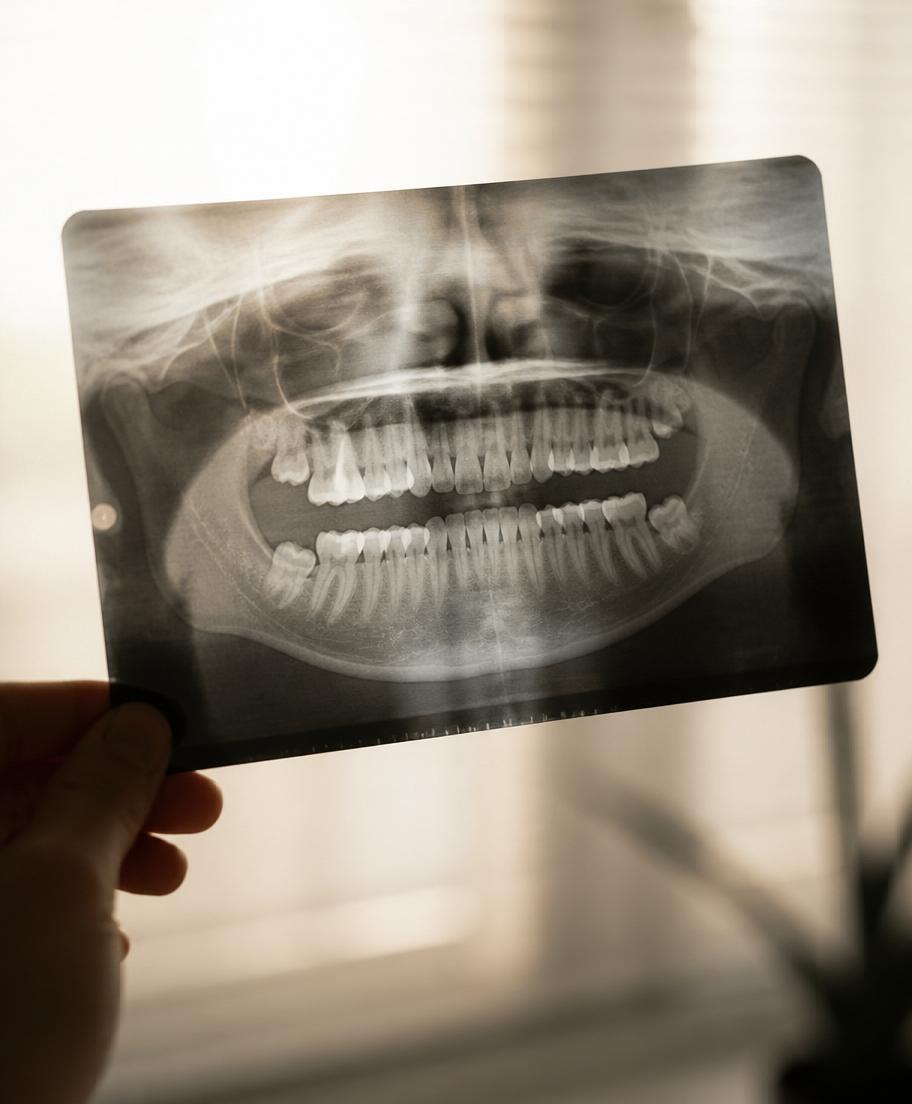
The original radiograph shows anatomy and foreseeable difficulty. The extraction note records fracture, retrieval attempts and advice. Later panoramic or CBCT imaging locates the fragment and may show sinus inflammation. Obtain referral correspondence, antibiotic prescriptions, ENT or maxillofacial records, hospital operative findings and pathology where relevant. A timeline should identify sinus symptoms and every report to the practice. An ENT expert may be needed for persistent sinus consequences, while an oral-surgery expert addresses extraction and management. The fact that later surgery removed a root proves its presence, not automatically that competent extraction would have avoided displacement.
The claim isolates the additional sinus and surgical burden
Compensation may include avoidable pain, infection, retrieval surgery, general anaesthesia, time off work, travel, care and persistent sinus symptoms, plus reasonable dental reconstruction. The patient cannot recover for extraction that was already necessary, but can recover for additional damage probably caused by negligent displacement or response. A retained fragment that is removed promptly with no lasting consequence will be valued differently from chronic sinusitis and repeated operations. Future treatment and prognosis must be supported by the appropriate specialists.
What if a tooth root was pushed into the sinus?
When a tooth root is pushed into the sinus, the immediate priorities are locating the fragment, checking for an opening between mouth and sinus, controlling infection risk and arranging appropriate specialist management. Displacement can occur despite competent care; negligence depends on planning, technique, recognition, disclosure and referral. Pre- and post-extraction images are particularly important.
FAQs
Frequently asked questions
Yes. Upper back-tooth roots can be very close to the maxillary sinus and can rarely displace into it during extraction.
No. It is a recognised complication. Planning, technique, recognition, disclosure, retrieval decisions and referral must be assessed by an expert.
Not necessarily. Size, location, infection and retrieval risk matter. An appropriate oral-surgery or maxillofacial clinician should decide the safest plan.
Possible symptoms include one-sided sinus pain or pressure, discharge, recurrent infection, bad taste and fluid movement, although some fragments are initially asymptomatic.
A panoramic radiograph may identify it, while CBCT can provide three-dimensional localisation where clinically justified. The original digital files are important evidence.
Only losses caused by negligence are recoverable. If extraction was necessary anyway, the claim usually focuses on additional sinus injury, surgery, symptoms and costs.
Not sure whether what happened crosses the line? Take a private, five-minute view. in confidence.
Free · confidential · no win, no fee · no obligation
Speak with the team · 0800 0126410Continue reading
Related injuries
%20--%3e%3ccircle%20cx='800'%20cy='530'%20r='34'%20fill='%233E8A8C'%20stroke='%232E6E71'%20stroke-width='4'/%3e%3cg%20stroke='%232E6E71'%20stroke-width='4'%20stroke-linecap='round'%3e%3cline%20x1='800'%20y1='576'%20x2='800'%20y2='596'/%3e%3cline%20x1='758'%20y1='558'%20x2='744'%20y2='572'/%3e%3cline%20x1='842'%20y1='558'%20x2='856'%20y2='572'/%3e%3c/g%3e%3c!--%20sealed%20crown%20on%20top%20(ink),%20infection%20trapped%20beneath%20--%3e%3cpath%20d='M700%20260%20Q800%20220%20900%20260%20L884%20300%20Q800%20270%20716%20300%20Z'%20fill='%231F2833'/%3e%3c/svg%3e)
Post-Treatment Dental Infection
Infection following dental treatment: when it indicates negligence, how it spreads, and why delay in treating it causes the most serious harm.
%20--%3e%3cpath%20d='M640%20200%20Q800%20180%20860%20300%20Q890%20360%20850%20380%20Q880%20430%20830%20450%20Q840%20500%20760%20510%20L760%20560'%20fill='none'%20stroke='%231F2833'%20stroke-width='6'%20stroke-linecap='round'/%3e%3c!--%20lower%20jaw%20/%20mandible%20highlighted%20(teal)%20--%3e%3cpath%20d='M700%20470%20Q820%20520%20940%20470%20Q1000%20440%20990%20380'%20fill='none'%20stroke='%233E8A8C'%20stroke-width='7'%20stroke-linecap='round'/%3e%3c!--%20TMJ%20joint%20point%20(teal%20circle)%20--%3e%3ccircle%20cx='990'%20cy='372'%20r='18'%20fill='%233E8A8C'%20stroke='%232E6E71'%20stroke-width='4'/%3e%3c!--%20fracture%20line%20across%20the%20jaw%20(teal%20zigzag)%20--%3e%3cpath%20d='M820%20496%20l14%20-22%20l-10%20-18%20l14%20-22'%20fill='none'%20stroke='%232E6E71'%20stroke-width='4'%20stroke-linecap='round'/%3e%3c/svg%3e)
Facial and Jaw Injury from Dental Treatment
Jaw fractures, TMJ damage, sinus perforation and soft-tissue burns: injuries that extend well beyond the tooth being treated.
%20where%20a%20tooth%20is%20lost%20--%3e%3cpath%20d='M812%20430%20C812%20372%20880%20372%20880%20430'%20fill='none'%20stroke='%233E8A8C'%20stroke-width='5'%20stroke-dasharray='10%208'/%3e%3c!--%20the%20lost%20tooth,%20tipped%20out%20and%20set%20aside%20(teal)%20--%3e%3cpath%20d='M1120%20470%20C1112%20400%201150%20378%201170%20386%20C1188%20393%201188%20430%201176%20486%20C1170%20512%201128%20500%201120%20470%20Z'%20fill='%233E8A8C'%20stroke='%232E6E71'%20stroke-width='5'%20stroke-linejoin='round'%20transform='rotate(28%201150%20440)'/%3e%3c/svg%3e)
Avoidable Tooth Loss
Losing teeth that could have been saved: how avoidable tooth loss happens, why it matters beyond appearance, and what replacement really costs.